

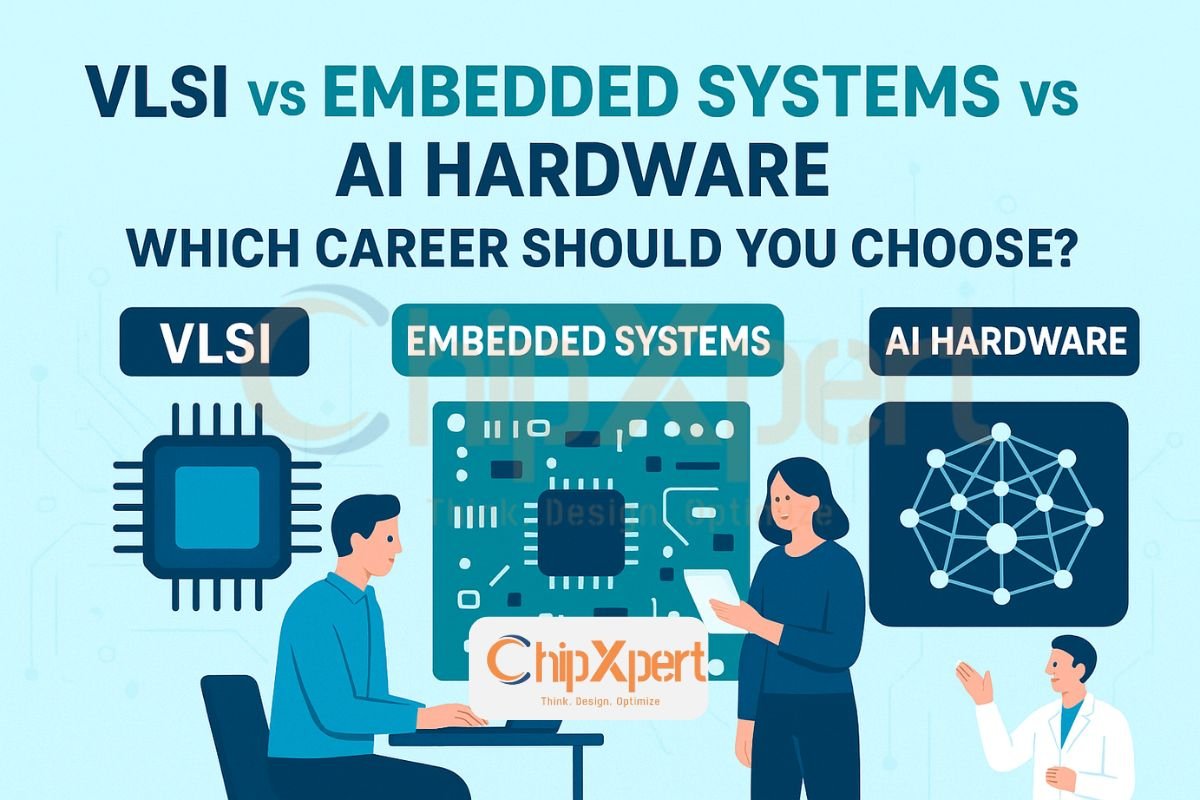
Choosing the right career path is a crucial decision, especially in the fast-evolving tech fields like VLSI, Embedded Systems, and AI Hardware. This article will guide you through the key differences and opportunities among these fields, helping you decide which career suits your passion and goals best. Whether you are keen on the intricate hardware designs of VLSI, the versatile application of Embedded Systems, or the futuristic AI hardware domain, this comparison will provide you clarity on where to focus your energy.
Understanding the Basics of VLSI
VLSI (Very Large Scale Integration) involves designing and creating complex integrated circuits (chips) that are the brains behind electronic devices. VLSI engineers deal with semiconductor physics, circuit design, and use Hardware Description Languages like Verilog and VHDL to develop hardware that powers everything from smartphones to supercomputers. This career is deeply rooted in hardware design and innovation.
What is Embedded Systems?
Embedded Systems combine both software and hardware to make devices intelligent and user-friendly. Engineers in this field develop firmware and software that control hardware components like sensors, microcontrollers, and peripherals. This field often uses programming languages like C, C++, and Python, focusing on real-time applications such as automotive controllers, IoT devices, and consumer electronics.
The Rise of AI Hardware
AI Hardware is an emerging field focused on creating specialized processors and chips designed to accelerate artificial intelligence workloads. This includes GPUs, TPUs, and custom ASICs designed to efficiently handle tasks involving neural networks, machine learning, or deep learning models. AI Hardware engineers work at the cutting edge of innovation, combining knowledge from VLSI and AI software principles.
Career Scope and Growth Potential
All three career paths boast strong job prospects and industry relevance. VLSI careers often provide higher compensation and international growth opportunities, especially in semiconductor hubs. Embedded Systems offer career flexibility across various industries, including automotive, healthcare, and industrial automation. AI Hardware is a rapidly growing niche, driven by the increasing demand for AI solutions and smart devices.
Skill Requirements Across Fields
- VLSI demands mastery in digital logic, circuit design, and EDA tools like Cadence and Synopsys. Engineers learn deep hardware concepts and verification methodologies.
- Embedded Systems require proficiency in real-time programming, microcontroller interfacing, firmware development, and understanding of embedded OS like RTOS.
- AI Hardware engineers should blend skills from VLSI alongside AI concepts, knowledge of machine learning algorithms, and experience with AI accelerator design and optimization.
Work Environment and Flexibility
Embedded Systems roles may offer higher flexibility, with opportunities in software-centric roles and remote work possibilities. VLSI engineering roles tend to be more lab-focused and hardware-centric but offer challenging technical work with a focus on innovation at the silicon level. AI Hardware roles similarly combine hands-on hardware work with software collaboration in research or design teams.
Salary Comparison Insights
Salaries for both VLSI and Embedded Systems professionals are competitive, with senior experts earning six-figure incomes, especially in developed markets. AI Hardware engineers can command premium pay due to the specialization and demand in this futuristic field.
Industry Applications of Each Career
- VLSI engineers typically work on chip design for consumer electronics, data centers, communication devices, and automotive chips.
- Embedded Systems engineers enable IoT solutions, robotics, smart appliances, and medical devices by bridging software and hardware.
- AI Hardware experts power AI-based applications in cloud computing, autonomous vehicles, smart surveillance, and edge AI devices.
Which Career Should You Choose?
Choosing a career depends on your interests and skill set:
- Pick VLSI if you are fascinated by chip architecture, semiconductor technology, and want to innovate at the core hardware level.
- Choose Embedded Systems if you enjoy software development closer to hardware, system integration, and desire diverse industry applications.
- Opt for AI Hardware if you are passionate about the intersection of AI and hardware technologies, eager to work in a fast-growing specialized field.
Advancing Your Career in These Fields
Continual learning is key in all three domains. Consider advanced certifications or courses in areas like Advanced RTL Design for VLSI, Embedded Linux or RTOS for Embedded Systems, and AI accelerator design for AI Hardware to boost your career prospects and stay ahead.
Making the right career decision in VLSI vs Embedded Systems vs AI Hardware can set the stage for a fulfilling and dynamic professional journey. Evaluate your passion, learning willingness, and market trends to choose the path that aligns best with your future goals.
This guidance from ChipXpert offers a clear look into these exciting careers to empower your choice for long-term success and growth.
Share your question in comments or talk to our mentor team for batch guidance.
Need Fee, Duration, or Demo Class Details?
Talk to our admin team for the latest batch plan and career guidance.
Contact Admin TeamAsk the Admin Team
Drop your basic question in comments: eligibility, prerequisites, tools, fee range, and placement support.
Our team reviews and responds regularly.