
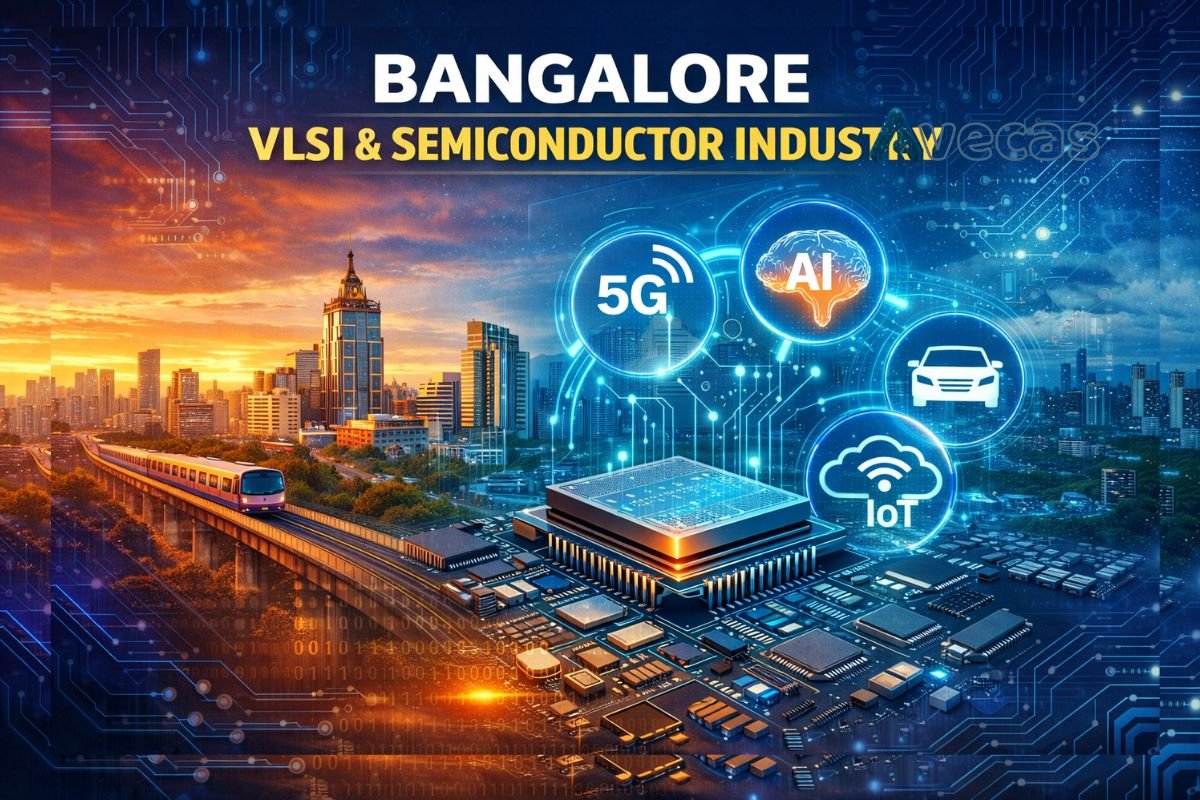
Bangalore has firmly established itself as the heart of India’s semiconductor and chip design industry. As global demand for advanced electronics grows, the city continues to attract major chip design teams, innovation centers, and R&D hubs. This growth is directly influencing the type of VLSI skills companies are actively seeking in 2026.
For students and professionals aiming to build a successful career in VLSI, understanding this evolving demand is no longer optional it’s essential.
Why Bangalore Plays a Key Role in VLSI Innovation
Bangalore is home to a dense network of semiconductor design units, IP development teams, and system-level engineering groups. This close-knit ecosystem allows faster adoption of new technologies and design methodologies.
Unlike traditional engineering hubs, Bangalore benefits from strong collaboration between industry and training institutions. As a result, skill requirements change rapidly, and professionals who continuously upgrade their knowledge remain highly employable.
High-Demand VLSI Skills in Bangalore
1. Design Verification Expertise
As chip complexity increases, verification has become one of the most critical stages of the design lifecycle. Companies are actively hiring engineers who can:
- Develop structured verification environments
- Work with modern verification methodologies
- Identify corner-case failures early in the design cycle
Verification engineers who understand real-world SoC behavior are especially valuable in large-scale projects.
2. Physical Design and Timing Analysis
With shrinking technology nodes, physical design has become more challenging than ever. Employers look for professionals skilled in:
- Floorplanning and placement strategies
- Static Timing Analysis for performance validation
- Power optimization and signal integrity
Engineers who can take a design from logic to layout are in constant demand across multiple industries.
3. Design for Test (DFT)
Testing is no longer an afterthought in chip development. Robust DFT techniques help ensure reliability, yield, and faster debugging after manufacturing.
Companies value engineers who can integrate testability features early in the design phase, reducing costly redesigns and improving product stability.
Growth of Domain-Specific Chip Design
Bangalore’s VLSI industry is moving beyond generic processors toward specialized silicon solutions. There is growing demand for engineers experienced in chips designed for:
- Artificial Intelligence and machine learning
- Automotive electronics and safety-critical systems
- Low-power and high-efficiency IoT devices
This shift makes domain knowledge just as important as core VLSI fundamentals.
Importance of Hands-On Industry Training
One of the biggest gaps in the VLSI job market is the difference between academic learning and real industry workflows. Employers increasingly prefer candidates who have worked on practical projects involving complete design flows.
Hands-on training helps engineers gain confidence in:
- End-to-end chip design processes
- Real tool environments used in companies
- Debugging and optimization techniques
Practical exposure significantly improves job readiness and interview performance.
Automation and Scripting Skills Are a Major Advantage
Modern VLSI workflows rely heavily on automation. Engineers who can simplify tasks using scripting languages stand out in the hiring process.
Commonly valued skills include:
- Automating reports and checks
- Improving design flow efficiency
- Analyzing large data sets from simulations
These abilities allow teams to save time and focus on innovation rather than repetitive tasks.
Career Growth and Global Opportunities
Experience gained in Bangalore’s semiconductor ecosystem is recognized worldwide. Engineers trained here often work on globally deployed products, making their skill set highly transferable.
As a result, VLSI professionals enjoy strong career growth, competitive salary packages, and opportunities to work on cutting-edge technologies across international markets.
Final Thoughts
The VLSI industry in Bangalore is evolving rapidly, driven by advancements in technology and global demand for smarter, faster, and more efficient chips. Engineers who align their skills with industry needs from verification and physical design to automation and domain-specific expertise position themselves for long-term success.
Staying updated, gaining practical experience, and continuously learning are the keys to thriving in Bangalore’s semiconductor ecosystem in 2026 and beyond.
Share your question in comments or talk to our mentor team for batch guidance.
Need Fee, Duration, or Demo Class Details?
Talk to our admin team for the latest batch plan and career guidance.
Contact Admin TeamAsk the Admin Team
Drop your basic question in comments: eligibility, prerequisites, tools, fee range, and placement support.
Our team reviews and responds regularly.