
The semiconductor industry is entering a decisive phase in 2026. With rapid growth in areas like AI chips, automotive electronics, EVs, and advanced SoCs, companies are actively looking for engineers who are not just academically qualified but industry-ready from day one.
This shift has made online VLSI certifications extremely popular among students and working professionals. However, not every certification delivers real value. Choosing the wrong program can cost you time, money, and career momentum.
This article is written as a practical blog guide to help students understand what really matters when selecting an online VLSI certification in 2026—without confusion, marketing hype, or unrealistic promises.
Why Online VLSI Certifications Matter More Than Ever in 2026
In earlier years, companies were willing to train fresh graduates extensively. In 2026, expectations are different. Semiconductor teams operate under tight schedules, and employers prefer candidates who already understand RTL design, verification flows, tools, and debugging basics.
Online VLSI certifications have stepped in to fill the gap between college education and industry requirements. A well-designed program can help you:
- Build practical VLSI skills without relocating
- Learn directly from industry-experienced mentors
- Gain exposure to real chip design workflows
- Prepare confidently for technical interviews
But the key lies in choosing the right certification.
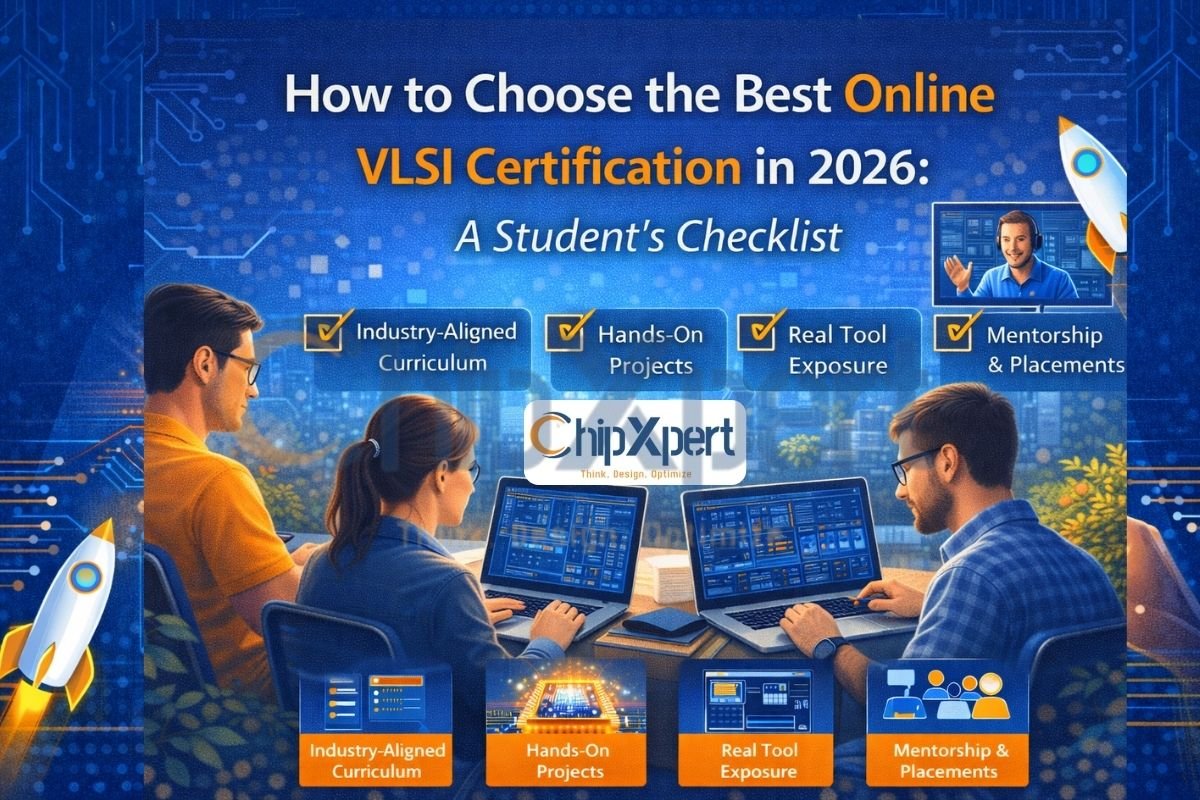
Start by Evaluating the Curriculum Depth
A strong online VLSI certification should feel like a career preparation program, not a collection of recorded lectures.
In 2026, an industry-aligned curriculum typically includes:
- Digital design fundamentals
- RTL coding using Verilog or SystemVerilog
- Basics of verification and testbench concepts
- Synthesis and Static Timing Analysis
- Physical design awareness
- DFT fundamentals and real-world relevance
If a course focuses only on theory or outdated topics, it may not help you during interviews or on the job. The curriculum should clearly explain how real chips are designed and verified in companies today.
Hands-On Projects Are Non-Negotiable
A true VLSI engineer is defined by what they can build and explain, not what they can memorize.
A quality online certification must include:
- Practical RTL or verification projects
- Step-by-step implementation guidance
- Debugging and improvement cycles
- Mentor review and feedback
Projects are what interviewers ask about first. They help you explain your thinking, showcase problem-solving skills, and prove that you understand design behavior—not just syntax.
Tool Exposure Separates Learners from Job-Ready Engineers
One of the biggest differences between academic learning and industry work is EDA tools.
In 2026, companies expect candidates to be comfortable with:
- Simulation and waveform analysis
- Synthesis and timing reports
- Verification environments
- Script-based automation basics
An online VLSI certification that includes guided tool exposure and labs prepares you for real work environments and reduces the learning curve after joining a company.
Mentorship Makes Online Learning Effective
VLSI is a complex domain, and learning it in isolation can lead to confusion or gaps in understanding. This is where mentorship becomes critical.
Good online certifications provide:
- Live doubt-clearing sessions
- Access to experienced VLSI mentors
- Feedback on assignments and projects
- Guidance on industry expectations
Mentors help you understand why something is done a certain way in real projects, which is invaluable during interviews and on the job.
Placement and Career Preparation Should Be Built-In
A certification should not end with course completion. It should help you transition into employment.
In 2026, placement-oriented VLSI certifications usually offer:
- Resume preparation specific to VLSI roles
- Mock technical interviews
- Interview-oriented problem solving
- Career guidance for freshers and professionals
These elements significantly improve confidence and interview performance, especially for first-time job seekers.
Flexibility with Structure Is the Ideal Balance
One advantage of online learning is flexibility, but too much flexibility often leads to inconsistency.
The best programs balance:
- Recorded sessions for revision
- Live interactive classes
- Fixed milestones and assignments
- Weekend or evening schedules
This structure helps students stay disciplined while managing college or work responsibilities.
Institute Credibility Still Matters
In 2026, recruiters are familiar with many training platforms, but they trust only those with consistent outcomes.
Before choosing a certification, look at:
- Trainer experience
- Alumni success stories
- Industry alignment
- Reputation in the VLSI ecosystem
A certificate from a well-known, industry-focused institute like ChipXpert – VLSI Training Institute – carries far more weight than a generic online badge.
Final Thoughts
Choosing the best online VLSI certification in 2026 is not about selecting the cheapest or the fastest course. It’s about choosing a program that builds real skills, practical confidence, and career readiness.
A strong certification will help you think like a VLSI engineer, speak confidently in interviews, and adapt quickly in professional environments. Use this guide as a reference, ask the right questions, and invest in a program that aligns with your long-term semiconductor career goals.
When learning is practical, guided, and industry-focused, online VLSI training becomes a powerful gateway into the semiconductor world.
Share your question in comments or talk to our mentor team for batch guidance.
Need Fee, Duration, or Demo Class Details?
Talk to our admin team for the latest batch plan and career guidance.
Contact Admin TeamAsk the Admin Team
Drop your basic question in comments: eligibility, prerequisites, tools, fee range, and placement support.
Our team reviews and responds regularly.